 Rocket - Think it. Type it. Launch it.
 Mini tools
 Photo AI
 Freepik AI Image Generator
 Stockimg AI
 Midjourney
 CreativePixel
 INLINER
 BestPhotoAI
 Ideogram
 SD Telegram bot
 Getimg.ai
 Shoots by Diktatorial
 Seedream
 Picsman - AI Photo Editor
 PixAI Art
 NewHero AI
 GenTube
 Reface
 FLUX
FLUX
 TinderProfile.ai
 Stable Diffusion
 So You Want To Be A Writer?
 Minka
Minka
 Ancient AI powered spirits
 Jvb ai
 somacguffin
 Cuty
Cuty
 Superfly Stoner

Pixelvibe







Overview
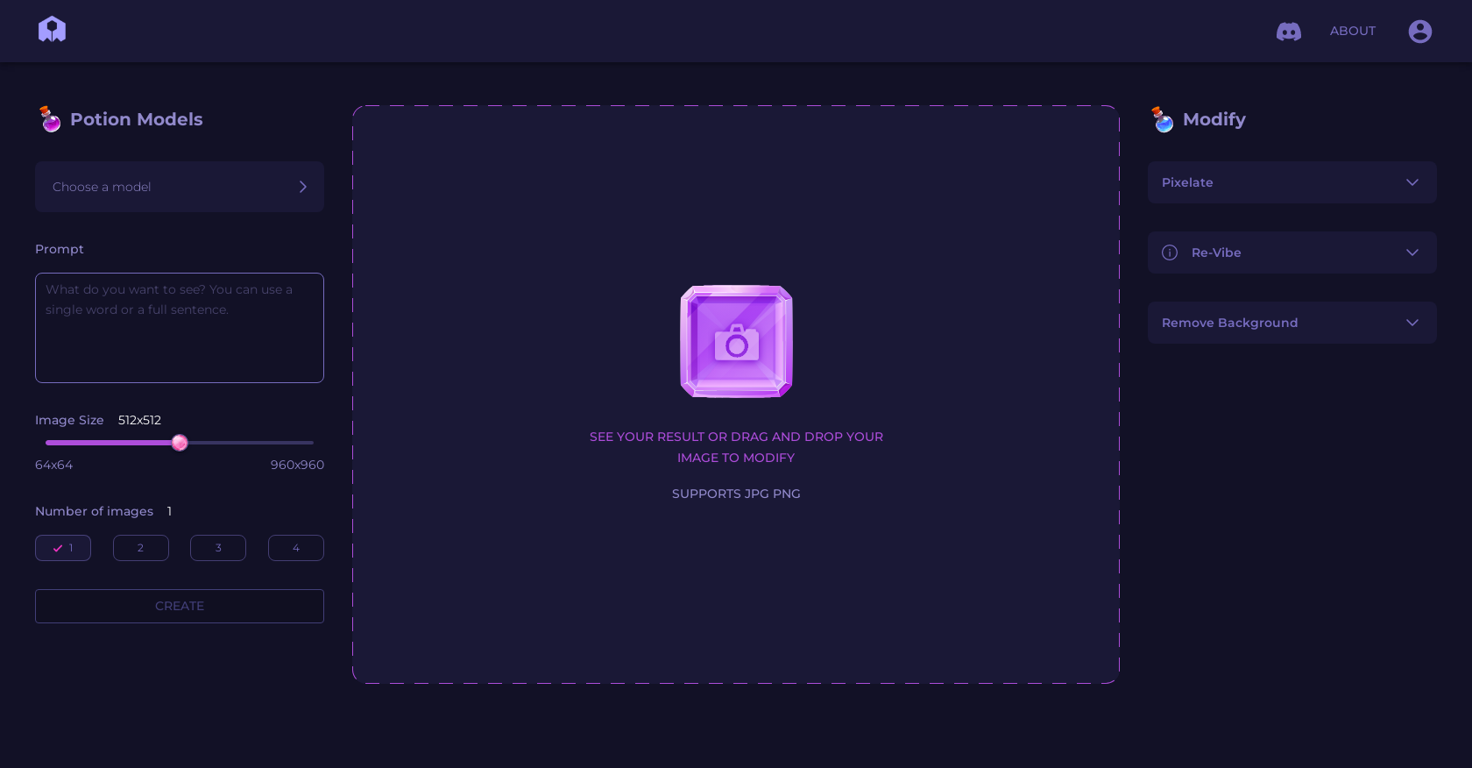
PixelVibe is a browser-based tool that utilizes generative AI to facilitate the creation of high-quality game assets. With PixelVibe, users can easily generate game assets without the need for complex software installations or technical expertise.
The tool offers various customizable options for creating these assets, such as selecting the desired model, image size, and the number of images to be generated.
Supported image formats include JPG and PNG. Additionally, PixelVibe provides users with several modification options to refine and customize their generated assets further.
These modification features include pixelation, enabling users to adjust the size of pixels for a desired visual effect. Users can also apply outlining effects to their assets, adding emphasis and definition to certain elements.
Moreover, PixelVibe offers a unique re-vibe functionality, allowing users to select an image as input and generate masks based on that image. This feature enhances creative possibilities and provides further flexibility in asset creation.To utilize PixelVibe, users are required to sign in and select an image to either generate masks for or modify.
The tool streamlines the process of removing backgrounds from selected images, enabling users to easily separate foreground elements from their backgrounds.
In summary, PixelVibe is a user-friendly and versatile AI-powered tool designed specifically for game developers and creators. Its browser-based nature and wide range of customizable options make it an invaluable asset in the creation of high-quality game assets.
Releases
Top alternatives
-
Arvoly XSL🙏 122 karmaOct 31, 2023@Photo AIIt's not free, it forces you to input an email before shoving a price tag in your face.
-
Freepik helps people to create better designs, faster.
-
-
Midjourney — v8 AlphaV8 Model Launch – Much stronger prompt adherence, better aesthetic understanding (via personalization, srefs, moodboards), more coherent/detailed images, improved text rendering, and ~5× faster generation Faster Web Experience – Upgraded interface to match speed, plus new Conversation Mode (flow-based prompting), Grid Mode (focused viewing), and sidebar settings for uninterrupted work Style & Control Improvements – Significantly better at learning your visual taste and maintaining consistency across generations New + Existing Parameters – Supports multiple aspect ratios and includes --chaos, --weird, --exp, --raw, with full backward compatibility for V7 profiles, srefs, and moodboards Higher Quality Options – New --hd mode (native 2K renders) and --q 4 for extra coherence when needed Pricing & Modes Update – Relax mode not available yet; HD/Q4/SREF/Moodboard jobs are currently 4× slower and 4× more expensive Feedback Loop – Built-in rating system (like/dislike + hotkeys) to help train and improve V8 Usage Tips – Best results with longer, more specific prompts; use --raw or references for control; higher stylization (--stylize 1000) recommended New Model Behavior – V8 has different strengths/weaknesses and may require new prompting approaches—experimentation encouraged.
-
Six months ago I was building some landing pages and found myself wasting way too much time downloading stock photos, cropping them, resizing, rehosting... the whole thing felt broken. I looked around for a tool that just let me describe the image I wanted and get it in the right format instantly—but nothing really existed. So I built Inliner AI. Now when I need an image, I just write what I want directly into a URL like this: https://img.inliner.ai/my-project/panda-playing-guitar-on-stage_1200x750.png Hit enter and boom Inliner generates an original AI image, intelligently cropped, resized for the web, and served instantly via CDN. Need a quick edit? Just append it to the URL: .../remove-the-guitar_900x750.png No uploads, no UI, no waiting. You can also upload your own products, people, or logos and compose them into generated scenes. For more control, there's a Studio web GUI where you can play with prompts and dimensions and compare variants side by side before committing. Where this gets really powerful is when you show your LLM how to use these URLs. Once it knows the pattern like: https://img.inliner.ai/my-project/xxx-yyy-zzz.png It can generate, tweak, and iterate on image assets dynamically, right inside your prompts or your code. Everything stays self contained in the link. We also include copy/pasteable instructions for Claude, GPT, Cursor, and more so you can wire this up in minutes. If you're building a product, designing a page, or just prototyping something new try it out and let me know what you think!






Related topics
 0
0